Friday, January 8, 2016

When the census makes no sense

Over the course of many years of researching lost ancestors I have found help in the U.S. census. I have also found problems and errors. Names are often not spelled correctly complicating an Internet search.  It would be rare not to find such anomalies - census takers often were dealing with immigrants with heavy accents and who themselves did not know how to read or write. Sometimes the information was given by a child or a neighbor who did not always have the correct information on ages or places of birth.  In the 1860 census my great grandfather Joseph Moreau dit Desrosiers appears as Joseph Morrow. For some reason in 1870 he drops Morrow and goes to his French nickname Desrosiers which leads to even more creative spellings: Derosia, Derusha, Dero and Deso.

Another example is my great-great grandmother Virginia Raymond Chicoine's census in 1880. I had found her in every census in US census from 1860 to her death after 1930 but the 1880 one had eluded me. I knew she lived in Highgate, Vermont and was twice widowed - with two children from her first marriage to Antoine Bouvier and four from her second to Paul Chicoine. She appears as Vergine Reymo with 6 children all with the surname Reymo. As a French woman, if she was the one speaking with the census taker she would have used her maiden name to identify herself - did the census taker assume that all the children shared the same last name? Or was the informant one of the older children who identified her mother this way and just gave the first names of her siblings? I certainly didn't search the indices for Raymond/Reymo. It is obvious that the census taker wrote down what he heard for the last name. This is true of many of both my French and Irish ancestors where Leary becomes Lary and Shea becomes Shay or even Chay.

Other errors may be deliberate. In researching a friend's family I discovered two sisters one older and one 2 years younger with ages correctly noted in all census until 1900 when the elder had gotten married. The newly weds were living with the younger single sister. The married sister had recorded her age as 2 years younger so her sister had to adjust her own birth date as to not give away her sister's fudged birth date. Since the husband would have been 2 years younger than his wife if the real date had been recorded I assume that was why she had adjusted her age.

Birth places can be in error - one granduncle who is listed as born in Vermont and by family tradition was born there was really born in Ireland A baptism record from Limerick proved that. In census where he probably gave the information he is listed as from Ireland but in others where his family probably were the informants it is Vermont. Why?

In a Kansas 1870 census a boarding school with about 1/2 Indian students and 1/2 white has the column denoting race with Ind crossed out. Why did the census taker or a later official do this? A native woman in the same town married to a white man is correctly identified in all the census but her children, originally designated as MB or mixed blood appear to get whiter with the passing decades. In another case the opposite is true. A man named George Washington, born in Virginia in 1841,  one of the few persons listed as "colored" in the census in Swanton, VT in 1870 appears with his white wife and white children. By 1880 his children have all become mulatto.

In the census for the 1860 census in Fall River, MA my Corbett ancestors and all Irish in the town appear in one index as from Idaho. Since that state was not yet in existence in 1860 it appears the census taker got creative and wrote Id for place of birth Ireland instead of the usual abbreviation IR or IRE.

It is very possible the census taker missed some people. Thanks to ancestry.com's census search I have been looking for a family who should be in the 1860 census. My great grandaunt Mary Leary Bresnahan and her child Cornelius Andrew Bresnahan appear in the 1870 and later census without her husband Andrew Bresnahan. They had married in 1854 in Manchester, NH and Cornelius was born in Fishville, near Concord NH in 1856.  I have searched  the US census nationwide for a child of that age and found none that match. Have even tried searching for child by just age and place of birth or first name only. Where was he? Where was his mother? What happened to his father? (disappeared? lost in war? civil war records doesn't turn up an Andrew that matches) He was probably deceased at least by 1872 when his wife remarried but no death record has yet to surface.  A mystery!


Thursday, May 7, 2015

Motherlines: documenting the women in our family tree.

Genealogy tends to follow back the paternal lines - father and mother to their grandfathers with the grandmothers sometimes only there as "Mrs." or only with a first name without their maiden names. It is interesting to do a "motherline" on the women in the family and since we are coming up on Mother's day I thought I would do just that.

This "motherline" needs their maiden names (which of course is the last name of their father - not their mother). I don't have any families with hyphenated names or with women who kept their own names. However on my paternal grandmother's side I am blessed by being from a culture (French Canadian) where women were often referred to in records by their maiden names (most Canadian census, baptism, marriage and sometimes death records). On my maternal Irish side I have had to rely on very unreliable marriage, baptism and death records to find the elusive maiden name. Even a missing person newspaper ad provided one name. Occasionally in searching census records a researcher can find a relative living with the family who reveals the woman's maiden name especially if the census notes the relationship to the head of house: in-laws, siblings, nephew or nieces, etc.
Mary Margaret Leary at the Lakes of Killarney near where her paternal grandparents lived.
Here are my "motherlines" beginning with my maternal grandmother Kathryn Grace Corbett mother of my mother Mary Margaret Leary.(1907-1994)

  • Kathryn Grace Corbett (1873-1860) daughter of Mary Bridget Shea 
  • Mary Bridget Shea   (1844-1924) daughter of Mary Agnes Farrell
  • Mary Agnes Farrell (1818-1886) daughter of Catherine Supple 
  • Catherine Supple (ca.1790-ca.1850) where the line ends somewhere in Limerick Co. Ireland  Her father's name is of Norman origin and found in Limerick from the 13th century. Her mother's name is unknown. Her name is from baptism records of siblings of her daughter Mary Agnes. 

Mary Agnes Farrell and Mary Bridget Shea came to St. Johnsbury, Vermont from Limerick. Some records indicate that Catherine Supple might have immigrated with her son John Farrell to Ohio.

The maiden names are retreived from baptism, some marriage and death records. A missing persons' ad published in the Boston Pilot identified Mary Agnes Farrell's sister Bridget who lived in the same town and made finding her baptism record in Ireland easier. Her mother's maiden name was on the record.

Here is the "motherline" of my paternal grandmother Ida Emma Desrosiers. (on right)

  • Ida Emma Desrosiers (Moreau dite Desrosiers) (1873-1924) daughter of Adelaide Raymond (dite Toulouse) 
  • Adelaide Raymond (1852-1915) daughter of Salome Dupuis
  • Salome Dupuis (1822-1907)  daughter of Marie Montminy 
  • Marie Montminy (Montmesnil) (1788-1827) daughter of Francoise Remillard
  • Francoise Remillard (1756-1809) daughter of Clothilde Denis (dite LaPierre)
  • Clothilde Denis (1740-about 1760) daughter of Marie Jeanne Clement (dite LaBonte)
  • Marie Jeanne Clement (1704-1758) daughter of Marie Jeanne Morisset
  • Marie Jeanne Morisset (1683-1756) daughter of Jeanne Choret(te)
  • Jeanne Choret (1652-1718) daughter of Sebastiene Veillion
  • Sebastiene Veillion (1626-1698) ,  daughter of Bernarde Venet
  • Bernarde Venet (1599-1657) in Verdille, France where the line ends and whose mother's name is unknown Her name is from her daughter's marriage record in 1647.

Salome Dupuis immigrated to Highgate Vermont Quebec  around 1850 from St. Valentin, Quebec. 
Sebastiene Veillion born in Verdille, Vienne, France immigrated to Beauport Quebec via LaRochelle France where she married in 1647.

The maiden names of all these women come from marriage records as well as baptism records where they are carefully noted. For an explanation of dit names google my blog on that topic.

Thursday, March 26, 2015

Millyard Immigrants


Amoskeag mill workers apartments - mill in distance

Throughout New England, one industry attracted immigrants during the 19th century - the mills. Swift flowing water allowed industrialists to construct textile mills in many small towns. Originally these mills attracted  New England farm girls, most of whom were Anglo-Saxon Protestants. However, the influx of Irish and later French Canadian immigrants provided a steady flow of cheap labor for these towns Often whole families including children would be employed in the mills. Most of those workers were Catholics and some spoke French or Irish.

In Manchester NH, many of the mill buildings still stand and an excellent Millyard Museum showcases the many ethnic groups that worked there before and after the Civil War.  see http://www.manchesterhistoric.org/millyard-museum 


From my own family history on my mother's side, her Bresnahan and Leary families were connected with the Manchester mills. Her great grandmother Margaret Fleming Bresnahan b. in 1798 appears there in mid-century.  Her son Andrew and daughters Julia and Honora immigrated with her but her husband Cornelius may have died in Ireland. She appears in the Manchester city directory in the 1850's but not in the 1850 census.


Whether she worked in the mill is not clear but by 1860 census she is listed with her two daughters: Julia , 20 (my great grandmother) and Honora, 16 both spinners as well as Patrick, 17 and Margaret, 15  possibly cousins and Honora Dillon, 19 relationship unknown. All were working in the mill. Well into the 20th-century children were an important part of mill labor force.


Mill children 1909

In the early 1850's Andrew Bresnahan met Mary Leary. Mary may have immigrated around 1848 with her sister Hannah and their father John. A Mary Leary (Lary) of the right age appears in the 1850 census in Manchester, a millworker. Andrew and Mary married in 1854 in St. Ann's parish. Mary was the elder sister of James Leary, my mother's grandfather, who would later marry Andrew's sister Julia.

Did Andrew also work in the mills? Some sources say that before the Civil War the mill employees were all female. However, since the mills were also producing steam engines right before the war and converted some sections to making munitions during the Civil War so it is possible he worked there. What is puzzling is his disappearance - neither he, his wife Mary or their young son Cornelius appear in the 1860 census anywhere in the US. By 1870, when Mary is a widow and she and her son are in the census but not Andrew .  
Mill workers about 1900

Tuesday, December 30, 2014

Bands of Brothers: Civil War Siblings


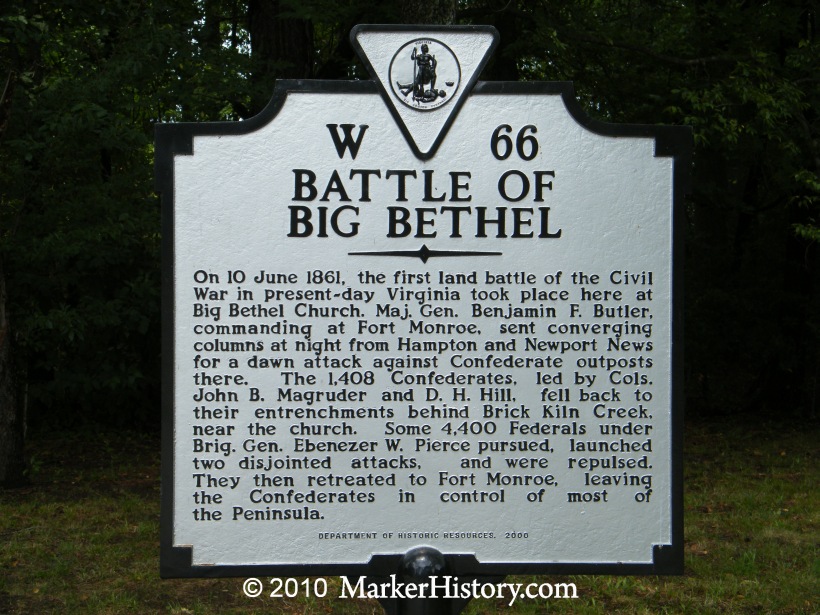
My paternal  great grandmother Virginia's life was marked by the Civil War. Her future 1st husband, a young blacksmith named Antoine Bouvier   would serve early in the conflict. He enlisted at age 19, May 2 1861 with his two brothers Peter and Joseph, in Company A of the 1st Vermont Infantry. He participated in the battle of Big Bethel Church , Va on June 10 1861. This battle was one of the earliest of the war and received wide press coverage. He was mustered out August 15 of that year and returned home to Vermont and his sweetheart Virginia. 

Did his example or stories of the Battle of Big Bethel church spur one of Virginia's brothers Israel to sign up in September of that year? He joined the 5th Vermont Infantry in nearby St. Albans, VT. in September 1861. They were stationed in and about Washington until the spring of 1862 when Israel would see action in several major battles Antietam, Gettysburg, Fredericksburg and was wounded twice in the battle of Petersburg. He saw action in Petersburg, Cold Harbor, Spotsylvania and Wilderness. A full list of all the action he would have seen is found in Page of the descendants of the 5th Infantry
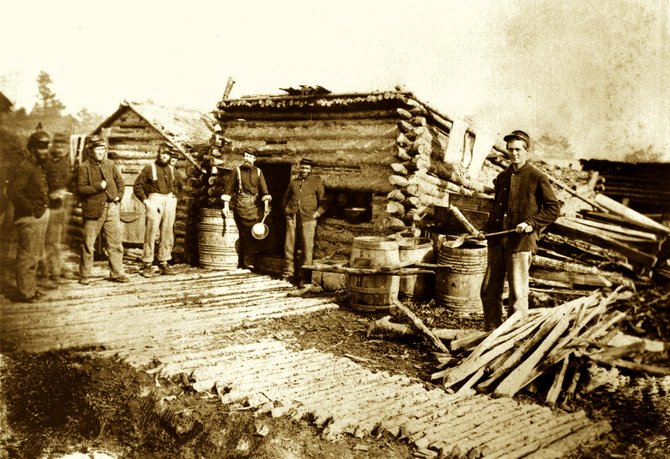
The 2nd Vermont Volunteer Infantry at Camp Griffin near Washington DC(Library of Congress)
Were his brothers Marcel and Tuffield* inspired by his letters, newspaper reports or impelled by patriotism or  the draft to   enlist in the conflict in late 1863 and 1864?  The Civil War was the first in which the US instituted a draft. As the war dragged on the government began to draft able bodied men who had not volunteered. This led to the draft riots in NY but evidently was accepted by the Vermonters. Those drafted could pay a substitute to take their place and I wonder if the bounty would have been attractive especially to Marcel with a growing family. Whatever the reason they both enlisted in Dec 1863 and Feb 1864 participating in action in Virginia until the engagement in the battle of Wilderness that would claim Marcel's life.
Mustered into U.S. service Sept. 16, 1861; mustered out June 29, 1865
5th Vermont Infantry Ensign
Thus three of her brothers: Marcel, Israel and Tuffield all served in the conflict in the same company of the 5th Vermont Infantry. Israel, who signed up in St. Albans in September 1861 when he was about 19. would later boast that he was the youngest soldier. That honor, however, went to his brother Tuffied who was probably about 16 when he enlisted. Israel would see action in several battles and was wounded twice in the battle of Petersburg. He saw action in Petersburg, Cold Harbor, Spotsylvania and lastly Wilderness. Perhaps it was his example, rather than Antoine's that inspired the two other Raymond  brothers to enlist.

Virginia would marry Antoine Bouvier  in Feb 1863 while Israel was on his way to participate in the Chancelorsville campaign. Their son, Antoine Jr.  was born in  December of that year just as his uncle Marcel was heading off to war. Virginia and Antoine would have a daughter Phoebe in 1865 but Antoine would die in a logging accident in 1866. In 1869 she would marry my great grandfather Paul Chicoine.  Paul did not serve in the Civil War. Virginia survived him and married a third time in 1885 to William Cook. He registered for the draft late in the Civil War July 1 1863 but there is no record that he served.
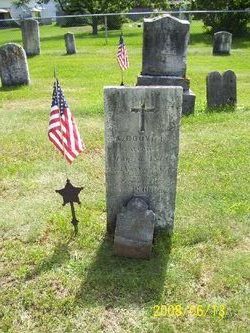
Bouvier grave Highgate Vermont
When his brother Israel enlisted Marcel was already married to married Sarah Dussault  and the couple had two small children. One of those toddlers died the year their third child was born in 1862. So it was not until two weeks before Christmas 1863 that Marcel joined the same company as his brother Israel. In the inconclusive battle of Wilderness in May of the new year Marcel would be wounded and ten days later die of his wounds probably in the field hospital established nearby in Fredericksburg.,

Their younger brother Tuffield would follow his siblings to battle in February 1864. He was only 16. He participated in the battles of Cold Harbor, Spottsylvania and Petersburg and was fighting along side his brother when Marcel was wounded May 5 of that year. The trenches (see picturewhere the 5th Vermont dug in are still visible in the Wilderness battlefied today.

Like many kin of those who fell in the  Civil War Virginia would have no body to bury in their cemetery in Highgate Vermont. She would have the consolation of an account of her brother's death from his two companions in arms.

* (christened Theophile)

Warriors

Ohio from Robert N.Dennis' collection of stereoscopic views

Some families have a strong military tradition. That wasn't true of mine - a cousin who served in Vietnam, an uncle by marriage who was a medic in the Pacific during WWII and another who was gassed in France during WWI. When I started doing family history research I discovered more collateral relatives: four great granduncles from my father's side who served in the Union army, one of whom died in the second battle of Wilderness, VA. On my mother's side there was a brother of my great grandfather who served in the Civil war but the closest to action he had was guard duty in Washington DC. Then I began to research a clue from my mother who vaguely remembered that her grandmother Mary Shea Corbett had received a military pension. Her sister, my aunt,  7 years younger, strongly denied that.


My great grandfather Dominic Corbett had enlisted in the US Navy in Boston in what is now the Boston ship yard. He had trained there perhaps on the relic of the war of 1812 the Ohio .
Massasoit
a sister ship to "old Ironsides" still visible today in the navy yard of Boston. He was assigned to the Massasoit - a river gun boat an early steam powered vessel see in the photo to the right. Such vessels were used to blockade river ports. At that time he became the ship's carpenter. In the summer of 1864 the navy was refitting a captured Confederate blockade runner in the Charleston navy yard. .The Tristram Shandy built in 1864 in Scotland was iron hulled and steam powered. The USS Kansas had pursued the British ship for two hours capturing it trying to take a cargo of cotton, tobacco and turpentine from Wilmington NC to fund the Confederate states When the refitting was finished Dominic was assigned to the Tristram Shandy starting again as a landsman -  a person with less than a year's sea service but soon became the ship's carpenter. .
Officer with artillery 

Looking at the Navy records using Google books to find correspondence and histories, Dominck’s movements during his Navy career can be followed. His pension record includes a record of wounds received around Dec 5 and of his treatment on Dec 7-10 on board the Tristram Shandy. It is possible that Dominic was injured during an incident which began on Dec 3 when a blockade runner ran aground near Wilmington near Fort Fisher. The Tristram Shandy, armed with a Parrott rifle and 3 pounders , destroyed the disabled ship before she could be used again. The report of the incident said that although the ship was in range of Fort Fisher guns and was bombarded it escaped injury. Injury on a vessel of this trip in such an engagement could come not only from enemy guns but as a result of  steam burns and injury on board his own vessel. The Navy report in his personnel record gives no indication how Dominic was injured..His wife noted he was wounded in left thigh and side and she attributed his later heart disease to this war experience. (since his father and at least two of his brothers appear to have died before the age of 50 probably from heart disease  the cause was probably genetic) 
A Parrott Rifle

The medical record from the log of the Tristram Shandy quoted in the pension record says that the cause of the illness was not noted. His wife indicated that they were wounds not just an illness, The treatment appears to have been only a cathartic pill and another medication which is hard to read and may be “doveri or Dovers grx with the notation “at nightly rush”. After three days the notation is “much improved, Whiskey duty”. 
A sidewheeler ship similar to the Tristram Shandy

A study of the movements of the ship Tristram Shandy show that it is part of the North Atlantic Squadron which blockaded the North Carolina coast and was situated off Wilmington, NC.  Navy correspondence during this time including some from the Tristram Shandy captain and from other ships mentioned the capture of a blockade runner. In the pension records it is noted that Dominic received “prize money” and the incident that led to this, capture of the blockade runner Bleinheim coming from Nassau to Wilmington, is described in the Navy reports.. The Blenheim was active Oct. 1864 to Jan 1865, 4 for 5 in successful trips; and captured by the U.S.S. Tristram Shandy at Wilmington on Jan. 25, 1865 Although it does not say how much Dominick received another sailor (John Dunlap alias Isaac Babb a former Confederate soldier) who also served on the Tristram Shandy as a Landsman received $18.26. This sailor also enlisted in Boston and served on many of the same ships as Dominick Corbett.  
In the diagram of the battle the Tristram Shandy is third from the top in the outermost ring of ships

      
        The diagram of ships for the 2nd assault on Ft. Fisher shows the ship as part of the “reserves” behind the main warships. This second battle of Fort Fisher NC was designed to totally cut off the crucial Confederate port of Wilmington, North Carolina and was successful. The Atlantic blockade which Dominic's vessel participated in made expansion of the Navy from a small fleet of about 90 vessels to a large fleet of "hybrid" vessels that used both steam and sail, gunboats that patrolled the rivers and the beginning of the US submarine service. See this link for more information  
More about the development of Naval warfare in the Civil War
For more about the ship Tristram Shandy see Google Books on Tristram Shandy history

Dominic return to Vermont after the war, married and had five children. My grandmother, Kathryn was the youngest of the four girls. Although she had little memory of her father since he died when she was a toddler, she did remember her mother getting a military pension which led me to research Dominick's military service.


Saturday, October 11, 2014

What's in a Name?

There are times when a genealogist feels like some of their ancestors were in some primitive version of the witness protection program. Finding them is like a detective novel. It doesn't help that some names morph with their passage through public records, with garbled spelling and pronunciation.Contrary to popular legend agents at the border of the US  did not necessarily change immigrants' names - sometimes they recorded them as they heard them, translated them, or the immigrants themselves made a change.  In looking for  names I have found it helps to say the name as the immigrant might have said it. Comparing that with the sometimes misspelled name in the census can be very helpful - Leary must have sounded like Lary to American ears and my Shea's like Chay. On the French side the problem is complicated by American spelling of French names by sound - Theophile becomes Tuffield, Marcel becomes Marshal, LaFleur, Lafley, Fortier, Firkey. Some names were just translated: Salome Dupuis when she moved to upstate Vermont became Sally Wells in public records.

The French Canadians  also have a system of "alias' " called "dit" names. Some families used these alternative names instead of the main surname, some flipped back and forth from one to the other. My Raymond line originally was Bertrand - the first immigrant from Toulouse France - a  Jean Baptiste Bertrand dit Raymond dit Toulouse was the son of Raymond Bertrand. For some reason Jean's son Francois took Raymond as his last name and added the dit name Toulouse to it. Although my Raymond's usually used that surname they appear in the 1840 US census as Toulouse in the only instance of that use in my line I have found. Of course the name is often spelled as it is said - Raymo, Ramo, Reymo, Rameau. Although my Chicoine surname usually doesn't use the dit name of Dozois attached to it spelling gets creative. The first immigrant that I have found (1822) learned to write his name in the US and signs it on his daughter's wedding record as "John Chequin" and on others as Chequine. (One branch of the family just gave up and used Shequine which made spelling for people less of a chore!)  The Desmarais dit Beaulac line become Demara, Demaray and Bolac with one line using only the dit name. The same occured with my Desrosier surname which turned out to be a dit name for Moreau. Without that realization I could never have traced the line back since they used only Moreau. I could never figure why they didn't stick with Moreau which although creatively spelled Moro or Morrow, is a  lot easier than Desmarais!  In doing research the dit name is important to know and the proper one for your line is essential. There are more than one unrelated lines of some surnames i.e. Raymond dit Toulouse is different than Raymond dit LaFreniere.

Naming patterns exist in different cultures - on my Irish side there are two - and helpful if you can get all the names of children in correct age order. The eldest son is named for his paternal grandfather, the eldest daughter for the maternal grandmother, second son for maternal grandfather and second daughter for paternal grandmother, next son and daughter are named for parents and in large families siblings of parents names start to appear. (An alternative pattern has first son and first daughter named for father's parents and second for his wife's.) However, this doesn't work if there is another person living in the family with same first name - James Leary and Julia Bresnahan did not name their second oldest son Corneilius for her father since her nephew Cornelius was living with them. Also check out Irish families children's middle names - I discovered that many times a maiden name of a grandmother would appear.

The French Canadians seemed to follow a different pattern with the eldest son named for the father. If that son died a younger brother or brothers would often receive the same name. I would suspect the use of "dit names" was helpful in villages where inhabitants had the same first and surnames. Multiple baptism names occur in this culture with "Marie" and "Joseph" appearing for every child in the family (even boys sometimes got "Marie") for religious reasons. My father disliked his name "Elphege Bernard" and did not know he was baptized "Joseph Elphege Bernard" - if he did he would have used it. Persons dropped or picked up their first names for different reasons - in one case a women dropped her first name and used one of her other baptismal names when she married a man whose sister in law had the same first name. Guess it got confusing.

Nick names were popular especially with the Irish - Mamie, Kitty, Bridie, Maggy, Peggy and Bridie. Some people adopted variations on their name: Cleophas became Charles, Michael Joseph decided he was Joseph Michael. Ellen Helen, Nellie, all were the same woman. Joanna, Hannah, Annie too. The genealogist looking for someone has to try all of the possible variations. Anastasia became Anty and later generations called her Anna.  So beware - names can be deceiving and do not get stuck on exact first and last names for the person you are researching. 


Saturday, May 31, 2014

The Cursed Wedding


French Settlers

Most French Canadian wedding records are fairly predictable - name of groom, his parents, residence, age, name of bride, her parents, residence, age. Sometimes you get lucky and the priest recording the marriage will make a note of the relationship of the witnesses or guests present to either of the couple. If anyone is capable of signing their name you may also be able to see that on a digital copy. You may also learn if the parents are dead or alive. You can get fairly cross eyed trying to read the handwriting and the French with the added challenge of paper that has bled through from the other side, blots, tears and great variety of handwriting - some quite undecipherable. While going through the register of Notre Dame parish  for my eighth great grandmother Marie Pontonnier's wedding  I discovered the record of her first marriage to Jean Gadois. Stuck in the pages of the register was a decree of annulment for the marriage. I thought I was misreading the crabbed handwriting when I saw the cause: non consummation because of sorcery.

Church annulments in the 17th century were rare - almost non existent. The story of my ancestor's annulment was not typical. Marie had immigrated from Lude in the old province of Anjou, France when she was a young teenager perhaps only about 13. She was born there in 1642 to Urbain Pontonnier and his wife Felice Janin. Was she an orphan when she traveled to New France? She arrived around 1656 and on arrival lived at the Hotel Dieu in Montreal under the care of its foundress,  Jeanne Mance, along with other young women awaiting a marriage alliance in the colony. The uneven ratio of men to women made such immigrants prized.

Through another girl at Hotel Dieu, Elizabeth Moyen, she met a dashing young corporal Rene Besnard, twice her age, a friend of Elizabeth's suitor Major Lambert Closse. Initially attracted to the man her interest cooled when she began to hear gossip about his amorous adventures. For Marie that ended any relationship but not for Rene who was not used to being rejected. He became, what we would call today, a stalker. Seething with rage and injured pride he watched Marie form a relationship with the son of one of the founders of Montreal, Pierre Gadois. Age 25, Pierre was younger and a a gunsmith with a solid reputation as a brave Indian fighter. . 

On May 6 1657 Marie and Pierre signed a contract to marry which was witnessed by her guardian Jeanne Mance as well as others including Major Closse. As was customary an announcement of the pending marriage (wedding bans) was done at the parish church for three Sundays. When Rene heard of the marriage he threatened Marie and informed her that he had occult powers. If she went ahead with the marriage he would put a curse on her that would prevent her from having children. Despite this, she and Pierre decided to go ahead with the wedding. Friends advised Pierre that to ward off the curse he should recite psalm 51 in Latin backwards during the wedding. One wonders if an already nervous groom could manage to carry this off! Marie and her friend Elizabeth scheduled their wedding on the same day August 12, 1657.

Rene Besnard attending the wedding - after all Major Closse, Elizabeth's fiance, was his commanding officer. During the ceremony he was observed knotting a cord and mumbling. Accounts don't mention if Pierre had the presence of mind to say the psalm backwards but obviously he was shaken by the experience. As a result, although Elizabeth and her new groom were soon awaiting their first child he was unable to consummate the marriage with Marie. He believed in the curse.  After a year the young couple approached the bishop in the hope that a bishop's blessing might remove the curse but nothing seemed to help.  In the meantime their persecutor was having problems himself. Marie and Pierre brought charges against him claiming  that he had propositioned Marie and sought to exchange sexual favors in return for removing the curse. He had boasted to others of  his role in their childlessness and two other people joined the couple as witnesses. Rene had a sudden lapse of memory about these conversations and tried to turn the charge around. He accused Marie of offering sex to him meeting with him when her husband was out of the house. Eventually the judge was able to sort out the charges and counter charges and Rene admitted to having made the threat of the curse but only to seduce Marie - and for that was jailed.

Witchcraft was taken seriously in the 17th century in New France as well as other parts of North America and Europe. Although Rene said he had not put the curse on Marie and Pierre but only threatened it he was liable to be tried on the charge of sorcery and even could have been burned at the stake. Although the court found Rene guilty he was lucky since he was only fined 300 pounds and banished to live no closer than 75 miles from Montreal.  Rene settled up the St. Lawrence river in Trois Rivieres and his reputation doesn't seem to have damaged his career or his marriage prospects. He married there in 1661 and was corporal of the Trois Rivieres garrison by his marriage. He was later named a public prosecutor and even  became a respectable church warden. He had some legal difficulties over the next 20 years  but managed to become a fairly prosperous farmer by 1681. .

Nearly two years had gone by since the wedding and even the trial of Rene did not cure Pierre's impotence. The couple had to wait another year according to church law to see if the situation could be remedied. When it wasn't they received the decree of annulment that I found over 300 years later in the pages of the wedding record of the parish of Notre Dame in Montreal. The marriage was annulled  August 30, 1660 because of "perpetual impotence caused by sorcery" and both were free to marry another. Pierre was ordered to provide compensation to his former wife both in money and beaver skins which would allow her to have a dowry and form another alliance. In her case she didn't take much time making a decision and was married to Pierre Martin November 3, 1660. Pierre was an immigrant from La Fleche also in the old province of Anjou and had arrived in 1653 with a large group of settlers referred to as the "Grand Recue". He was both a surgeon and a lawyer. It didn't take long for Marie to become pregnant - the curse was broken.

Unfortunately she had little time to enjoy her new married happiness, Pierre Martin was caught up in an Iroquois ambush four months later and decapitated. His body was found in June 1661. His posthumous daughter was born Nov 9 of that year to the young widow. A month later Marie married Honore Langlois about 10 years her senior who had been recruited to come Quebec in 1651. At the request of the governor of Montreal he was one of ten men recruited to move there to aid in the defense of the settlement against the Iroquois. Honore had made his home in Montreal buying cattle and clearing a large tract of land.

Montreal was a small settlement of perhaps 50 families. The census of 1666 enumerated 627 men, women and children. In that enumeration were Marie Pontonnier and her husband Honore Langlois with her daughter Marie and two of their children, a daughter Jeanne b. 1664 and a small son Honore who would die that same year. However she and Honore would go on to have 8 more children. In the same census is found her former husband Pierre Gadois who, perhaps with good reason after his experience with his first marriage, waiting until 1665 to marry. He and his bride Jeanne Bresnard (no relation to Rene) married in April of 1665 and were awaiting the birth of their first child. He and Jeanne had 14 children successfully overcoming the curse.
Looking over the census of 1666 I can see several other families who appear in my own family tree: Interestingly my direct ancestor Pierre Chicoine is living in the village having arrived a few years before. He is still single as are a number of men in the village. A scarcity of French women is being remedied by importation of the "Filles du Roi" imported brides begun three years previously. His future bride Madeleine Chretien would arrive in 1670. Also in the village were the LeMoyne family. Charles Lemoyne and his wife Catherine Thierry and sons would play a role in my family history since Pierre would work for them and settle in their seigneury of Longueuil.. Charles would be a witness at Pierre and Madeliene's wedding and sign the register. His son Pierre known as d'Iberville, soldier and explorer with his younger brother Jean Baptiste LeMoyne would survey the territory of Louisiana. Jean Baptiste would be the  first governor of the colony and in 1718 found the city of New Orleans where I currently reside. .

(for more information see  series of biographies in Our French Canadian Ancestors/Nos Ancetres by Gerard Leber and Thomas LaForest - Marie Pontonnier and the men in her life )